Why travel along Highway 1? Highway 1 is one of the most beautiful drives in the U.S. Possibly the most beautiful. Driving along this highway is more than just a means of transportation, it is a state of being. It embodies the experience of people, sea, and sun, making it a must-drive road in the U.S.A. The drive starts just north of San Francisco and winds along the coastline to Los Angeles. A stark contrast to the driving experiences often depicted on American films, the drive is an experience unlike any other. The California sun and ocean are just the beginning, there are small towns and national parks along the way. Driving the highway has always been a part of the Californian way of living. The steep cliffs and mountains on one side and the Pacific ocean on the other give this road its own identity. Highway 1 is better than any other highway, especially in the morning. The mist gives the driving experience an illusion of driving through the clouds, moving the road along with it. By evening, the sunset spilling across the Pacific is unbeatable. The route is also made more interesting with unique towns and natural points of interest: The Artistic Carmel The Danish Solvang Bixby Creek Bridge which was the world’s largest single-arch concrete bridge Big Sur which is often listed as one of the top 50 places to see before you die. ... Every place along the way has the potential to become part of your own travel story. How to best enjoy the Highway 1 drive?

When driving in the U.S. the systems are very developed, fuel is cheap, and the roads are scenic with park-like scenery all throughout the drive. The Highway 1 drives offers all these and more, which makes it an obvious choice for self-drive or private car tour. The route is designed with many pullouts to allow for safe stopping to take pictures and enjoy the view, so you don’t block the two-lane road. You could easily lose time by stopping at every viewpoint. In the U.S. highways are numbered with odd numbers running north to south, and even numbered highways running east to west. Highway 1 is the lowest numbered north/south highway with California’s Pacific shore on one side and snow capped mountains on the other. So the best drive is to go south from San Francisco to Los Angeles. This route will keep you on the ocean side of the road, allowing easy access to the coastal views. Recommended driving route: San Francisco → Monterey → 17-Mile Drive → Carmel → Big Sur → Solvang → Santa Barbara → Malibu → Los Angeles. Essential Highway 1 Self Drive Tips. Self-drive tips: 1. Drive north to south, from San Francisco to Los Angeles. This way, you will be traveling on the side closest to the coast. In the opposite direction, there will be a number of roadside viewpoints that will be hard to stop and see. Keep in mind that the best sections are next to dramatic sea cliffs and the mountain sections will require a lot of confidence and good driving to pass. 2. Just entering San Francisco and Los Angeles as your start and end points is not helpful. You will want to set your own waypoints along the route. If you let the navigation choose the route for you, it will probably take you onto U.S. Route 101 instead of California Highway 1, and you will miss many of the best views. There are many points of interest that will need to be entered one by one into your navigation system as final destinations. Try to navigate to one destination at a time. If you are trying to enjoy the coastline, you will want to stay on Highway 1 and miss as few attractions as possible. 3. Depending on the time of year that you are traveling, the California sun may be quite intense, especially if you are traveling during sunrise and sunset. In addition to safety, bring a good pair of sunglasses, particularly polarized ones if you will be driving, as they will reduce glare;

although it may be challenging to see your navigation screen while wearing polarized sunglasses. "As the trip progresses, passengers should help observe the route and the road regarding safety." When traveling at your preferred speed, it may be worth considering an overnight stay in Carmel, or in Solvang, which has a Danish theme. There are quite a few small inns along the route, so as evening approaches, you should stop to stay overnight. The drive should not be rushed after the sun goes down; it is less safe, and the landscape will be gone. What to See and Do > Half Moon Bay State Beach - Half Moon Bay, CA The Californian coastline is marked with charming surfing towns and the most ideal location is Half Moon Bay for its proximity to San Francisco and its calm vibes. Here, you can cliffside golf, surf the famous Mavericks break, or visit a small brewery. > Pigeon Point - Pigeon Point As you travel down Highway 1 you will see this active historical lighthouse, the tallest on the Pacific Coast. Visits are free and each November, there is an event that reenacts the old ways of lighting the lamp with kerosene, making it a very photogenic stop. > Monterey, CA Monterey is an example of a traditional California coastal town with beautiful surroundings, warm locals and a rich blend of Spanish and Mexican heritage. The Monterey Bay Aquarium and 17-mile drive are highlights. Monterey has a vibrant art scene with museums and performance art spots featuring both local and international artists. Cannery Row, named after author John Steinbeck, is one of the most famous streets. The area has plenty of marine wildlife and the Monterey Bay Aquarium is one of the biggest aquariums in North America.

17-Mile Drive

Starting from Monterey, head south and follow signs for Pebble Beach’s 17-Mile Drive. This 17-mile coastal road passes through private land so you will have to pay a US$10 fee per vehicle to drive it, which is the only toll you will encounter along highway 1. The road is considered one of the most scenic on the west coast as it wraps around a peninsula. On the hills, you will see large grand houses sitting between the mountains and the ocean which belong to America’s wealthy elite. Expect to see plenty of luxury vehicles as well. You’ll also find world-class golf courses and some of the best golf tournaments. Looking out across the water, you will find designated stopping points to view the coast, so make sure to stop. If you have time, consider spending the night in Carmel which is very close and a charming town with a strong sense of artistic community.
Carmel-by-the-Sea
Although this town only has a history of less than 100 years, it has long been a home for artists and writers due to its beautiful environment and its historic coherence. Bohemian-style has been the main style of the town which has a population of a little over 4,000. The residents have a large role in maintaining the town's character by stopping it from modernizing. There is no advertising, telephonic signs, parking meters, or fast food locations.
With its beautiful arts scene and natural surroundings, Carmel is one of the best stops along California Highway 1 and the 17-Mile Drive. Craft stores, galleries, antique shops, toy stores, candy stores, and boutiques all stimulate the senses and encourage browsing.

“Carmel of Artists, Poets and Writers” has been known for over a hundred years. The celebrated Chinese painter, Zhang Daqian, lived here in 1969. He named his house “Ke Yi Ju,” which translates to “A Place Fit to Live.”
Many distinguished artists and writers of this coastal town have built houses in the hills overlooking the ocean. The town’s unique architecture and surroundings can be found in storybooks. To the west of the town, advertising, neon lights, fast food, and other commercial enterprises are banned to protect the town’s character. Walk all the way to the west end of Ocean Avenue, and you will find Carmel Beach, the wide and beautiful beach at the beginning of the 17-Mile Drive.
Bixby Creek Bridge

Bixby Creek Bridge is one of the most popular photo spots in the United States. Opened in 1932, it was the first and longest single span concrete arch bridge. At 714 feet, it is the largest in the country. It’s position on the California coast makes it one of the most photographed places in the area.
Big Sur
For a travel lover, Big Sur is the place to be. Many consider it the best section of the California Highway 1. It’s untouched and unrefined beauty is something you can’t find anywhere else. It’s the highlight of the entire highway and one of the most beautiful coastlines in the world.
From Carmel to Hearst Castle, the Big Sur coast stretches for approximately 90 miles. The lack of urban centers and boundaries, along with sea fog, redwood groves, and elephant seals, gives this place its unique charm. It has been a magnet for visitors for decades, drawing in the likes of Beat Generation writers like Jack Kerouac and Henry Miller. Blue skies, crashing waves, and towering cliffs…this is the coast visitors come to discover when driving along Highway 1. Big Sur From the meandering roads of Highway 1 to the breathtaking views on the drive from San Francisco, the California highway system feels like it was designed with artistry in mind. As a driver descends southward from San Francisco along Highway 1, the stretch of road that spans the greater part of California calls the traveler to gaze upon the sights, as they are many. Coming up on the left side of the road, there are walls of sheer rocky mountains that rise into the great blue sky, with California pines toward the rocks. On the southern side of the road lies a wide and quite startling view of the deep blue waters of the ocean, seen first as a rich cobalt hue, then changing to indigo, dark and pale blues. When they meet the shore, the surrenders the surf and white foamy waves. Golden, yellow, and ochre beaches curve back into the surf. The rocks of the southern continental margin meet and break the waves. The scatter the waves and create a glittering spray. Having a wild and natural beauty that is unspoiled, it is of no surprise that Big Sur is often listed among the top 50 places to see before you die. Piedras Blancas Elephant Seal Rookery This is a stop worth taking along with seeing the Elephant Beach Seals after Big Sur. From the observation decks on the low cliffs, you will see large groups of elephant seals sprawled across the beach, basking in the sun and sleeping undisturbed by the world. Just keep in mind one important rule: do not go behind them or get in their way as they head for the water. Elephant seals become anxious when they feel their escape may be blocked and will respond with loud, aggressive roars. Hearst Castle Hearst Castle was once the private estate of the family of American publishing magnate William Randolph Hearst. It is one of the most extravagant residences in California and the American West and hosted famous guests ranging from Charlie Chaplin to U.S. President Roosevelt and British Prime Minister Churchill. Hearst Castle is one of the most extravagant estates in California. Its owner, William Randolph Hearst, was a media mogul in the U.S. during the 1920s and 1930s. It is located on a hilltop, took 28 years to build, and was designed with no regard to practicality. The main attraction is the two swimming pools. The indoor pool has a gold-plated floor and mosaics of sea creatures on the bottom, while the outdoor pool has white marble sculptures surrounding it. Hearst was a major art collector, and the furnishings, tapestries, paintings, sculptures, fireplaces, ceilings, staircases, and even entire rooms are works of art. Solvang, the Danish Village (Solvang) Of the towns along Highway 1, Solvang has some of the most character. The landscape around the town makes it easier to understand Hans Christian Anderson's fairy tales. It has grass, flowers, windy windmills, and mountain mist. The town has many shops and restaurants along with bakeries, and many of their buildings are made in the style of Danish architecture. The town also has a one-third replica of Copenhagen's Round Tower, a statue of the Little Mermaid that is a replica of one in Copenhagen, and a bust of Hans Christian Anderson.

Danish Village
Solvang is a word meaning sunny fields in Danish. It was built in the early 20th century by Danish immigrants. These immigrants also brought their town planning and archicture with them. It has been said that in the first population census, two-thirds of the people who lived there, were of Danish descnced. Solvang is a great place to experience some of the Danish culture for people traveling in North America, because unlike going to Northern Europe, you can go to Solvang and it only requires a flight to Northern Europe

Santa Barbara (Santa Barbara)
Santa Barbara has been described as one of the most ideal places to retire in the United States. It is a Spanish styled coastal town and many of its buildings have a spanish colonial style. It is located 90 km north of Los Angeles. It has a low and wide beach along its coastline that is referred to as the American Riviera. It has many palm trees along its streets and its beach has a high population of seagulls.
Home Prices: Santa Barbara has long been a quiet place for wealthy residents and celebrities to buy property, and as a result, its home prices are some of the highest in the country.
Classic Itinerary Suggestion: One Day
Classic one-day itinerary
In just one day, the best section to visit is the San Francisco–Monterey section.

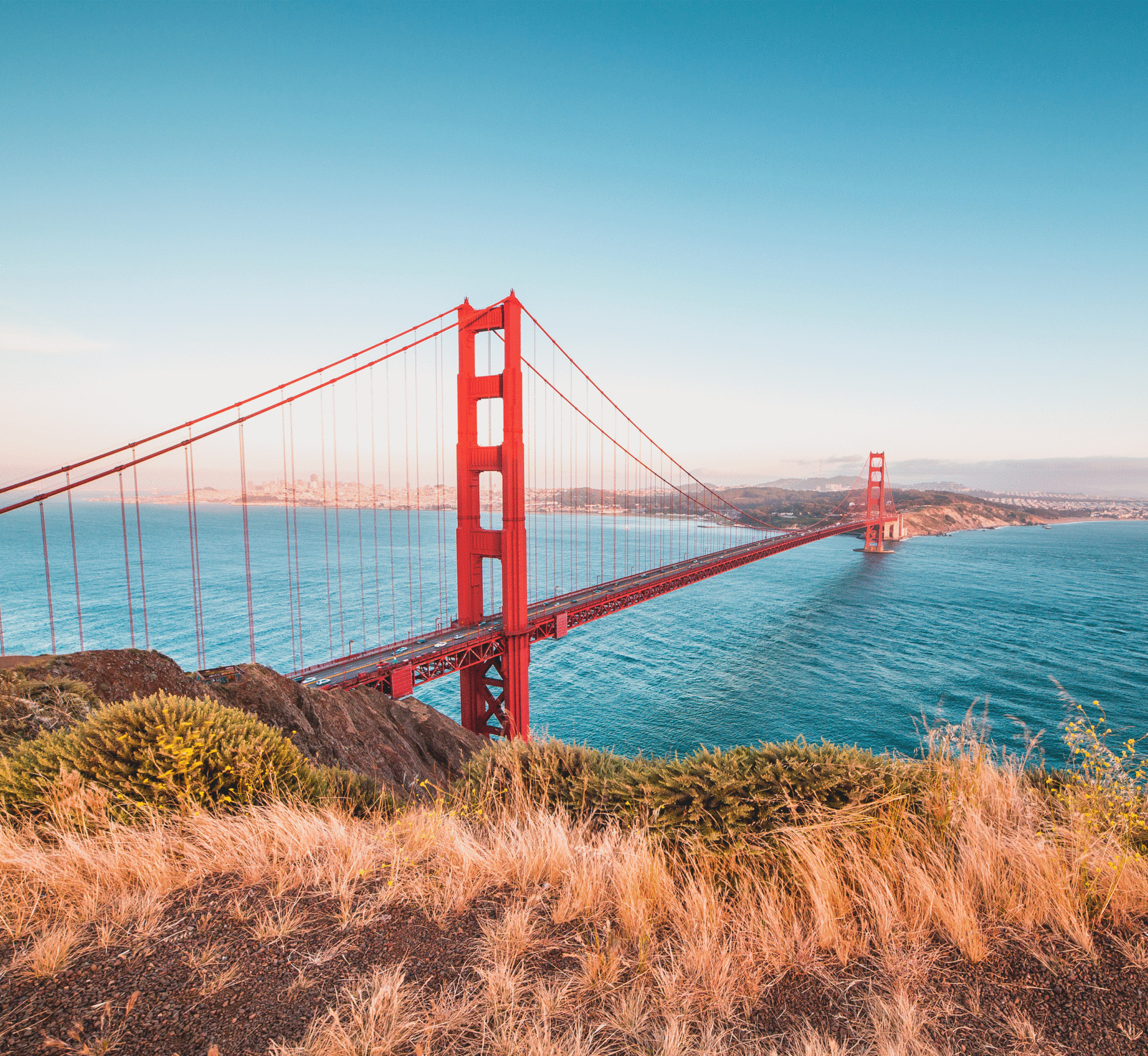
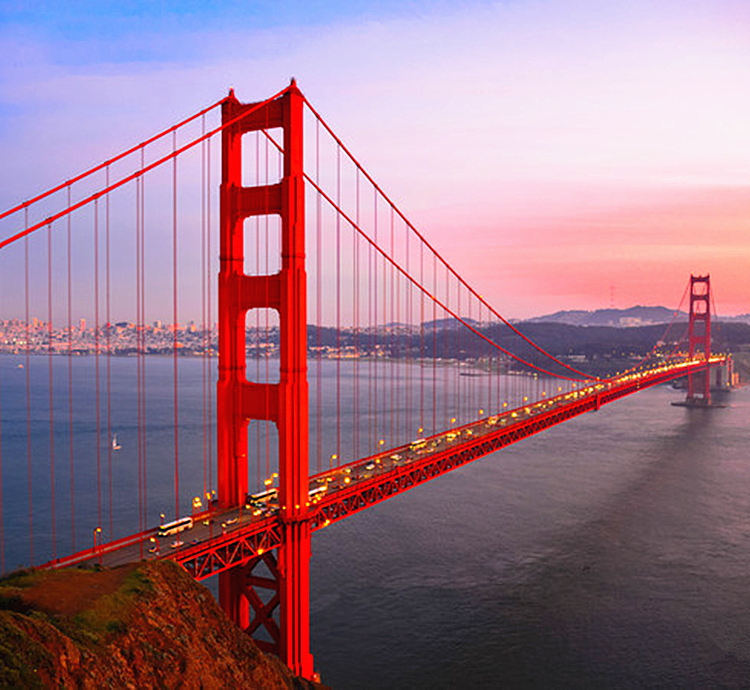
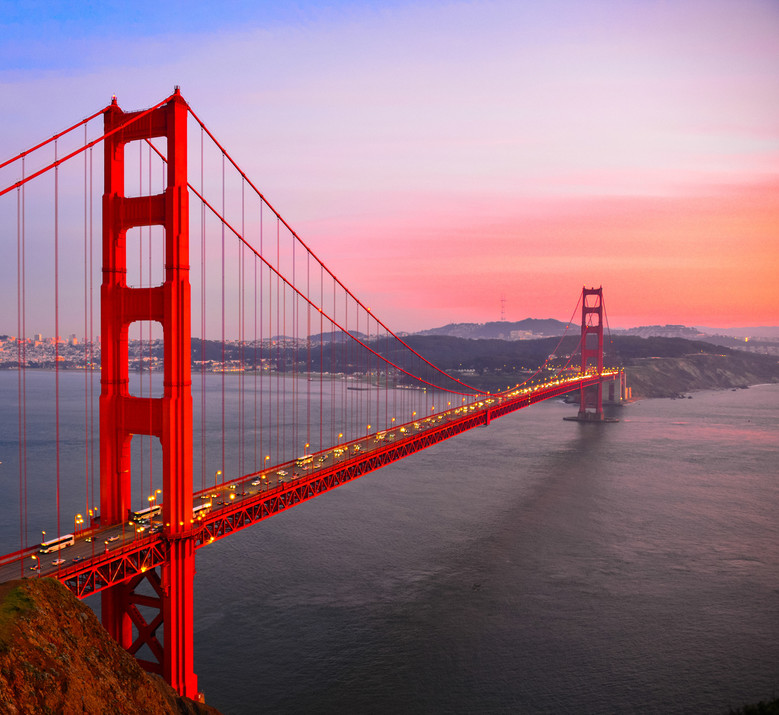
Be the first to leave your San Francisco hotel. Starting at the Golden Gate Bridge, Highway 1 opens up and transforms into a wide avenue that carries you all the way to 19th Avenue. Merge onto I-280, and a few kilometers down the road, you will arrive in Daly City. When driving from San Francisco to Santa Cruz, you will be able to appreciate 70 miles of beautiful coastline with various natural beaches, organic farm stalls, and cozy small towns by the sea. The Half Moon Bay State Beach, which is 4 miles long, has a beautiful camping area that is right next to Highway 1. Approximately 20 miles Northwest of Santa Cruz is where Año Nuevo State Park is located, which is known to be the largest mainland breeding ground for northern elephant seals. Their breeding and mating season is in the winter, and if you want to go on a guided visit, you will need to make a reservation in advance.

Santa Cruz (Santa Cruz)
From there, you will come to Santa Cruz where the Santa Cruz Beach Boardwalk will be an attraction for the whole family. It has a classical theme park with old-style roller coasters, arcade games, a carousel, and of course, corn dogs. Santa Cruz is one of the best known surfing spots in California, and Steamer Lane is a mecca for serious surfers. You will find lovely wide beaches that have soft surf which is perfect for swimming.

*Monterey (Monterey)
Just a little further down the road, you will notice that the coastal road is disappearing and the road starts heading inland again. Just before arriving at Monterey you will see Marina State Beach. Everything in Monterey is connected to the sea and its awesome aquarium which draws visitors from all over the world. Once established as a national marine sanctuary, the area has become a popular destination for diving, whale watching, kayaking, and stand-up paddleboarding. The historic downtown area embodies California's Spanish and Mexican heritage, and Old Fisherman's Wharf has been one of Monterey's top visitor attractions for over 50 years. The unique scenery of 17-Mile Drive includes blue water and sky, flowers and rocks, squirrels, seabirds, seals, cliffs, and ancient pines. It is no surprise that people living here are, powerful or famous.

Classic Itinerary Suggestion: Two Days
Classic two-day itinerary
Two days allow you to experience the major highlights of Highway 1.
Starting Route: Los Angeles:
Day 1: Leave a Los Angeles downtown hotel at 9:00 (2-hour drive) → 11:00 Visit Solvang, a Nordic town in California sunshine (2.5 hours) → 13:30 Lunch (own expenses) → Drive to Hearst Castle (2-hour) → Hearst Castle, a media tycoon private estate (2.5 hours) → Big Sur (1 hour) → View the sea during the ride (2 hours) → End: Overnight at a Monterey downtown hotel.

Day 2: Leave a Monterey downtown hotel at 9:00 (0.5-hour drive) → Monterey Bay Aquarium, Old Fisherman’s Wharf; and the historic district of Spanish & Mexican style (2.5 hours) → 12:00 Lunch (own expenses) → Visit Carmel, one of the prettiest small towns in the world (2 hours) → Explore the renowned coastline of 17-Mile Drive (1 hour) → 16:00 Leave for downtown San Francisco (2-hour drive) → End: Overnight at a San Francisco downtown hotel.
Classic Itinerary Suggestion: Three Days
Classic three-day itinerary

Day 1: Leave a San Francisco downtown hotel at 8:30 (0.5-hour drive) → Half Moon Bay State Beach (2 hours) → Drive to Pigeon Point Lighthouse (0.5-hour drive) → Pigeon Point Lighthouse (0.5-hour) → Drive to Santa Cruz (0.5-hour drive) → 12:30 Lunch (own expenses) → 13:30 Santa Cruz Beach and Beach Boardwalk, have fun. Day 1: 13:30 → 14:00: 1.5 hours Visit Monterey (1 hour drive) to take pictures and enjoy the sea breeze at Old Fisherman’s Wharf. Visit the Monterey Bay Aquarium, drive along the famous 17-Mile Drive. 18:30 End: transfer to a Monterey downtown hotel.

Day 2: Depart from a Monterey downtown hotel at 9:30. Visit Carmel for 2.5 hours. Lunch at your own expense at 12:00. Drive to Bixby Creek Bridge after lunch (30 minute drive). Take pictures of Bixby Creek Bridge (1:00-3:00) that is in many movies. Drive for 2 hours straight to the end of Big Sur. See the elephant seals and visit Hearst Castle for 1.5 hours. Drive to San Luis Obispo downtown (1 hour drive) 19:30 End: transfer to a San Luis Obispo downtown hotel.

Day 3: Depart from a San Luis Obispo downtown hotel at 9:00 and head to Solvang for 1 hour. Visit the Danish Village, lunch on your own. 13:00 Drive to Santa Barbara (40 minute drive). Explore Santa Barbara for 2 hours. At 16:00 drive to Santa Monica for 1.5 hours. Arrive at 17:30 and enjoy the waves and sunset at Santa Monica Beach for 1 hour. 19:00 End: transfer to a Los Angeles downtown hotel.