People visualize San Francisco in many different ways, but there is a set of most important places to see the first time a visitor comes to the city. This includes the well-known Golden Gate Bridge, the San Francisco waterfront, steep streets, famous parks, and places known as landmarks of the counterculture. This guide will help you with the most important places to see in the city.
1. Golden Gate Bridge — the view from the bridge is one of San Francisco's most famous postcard locations
Highlighted as a site of a Hollywood film, the bridge is also known for its fog.

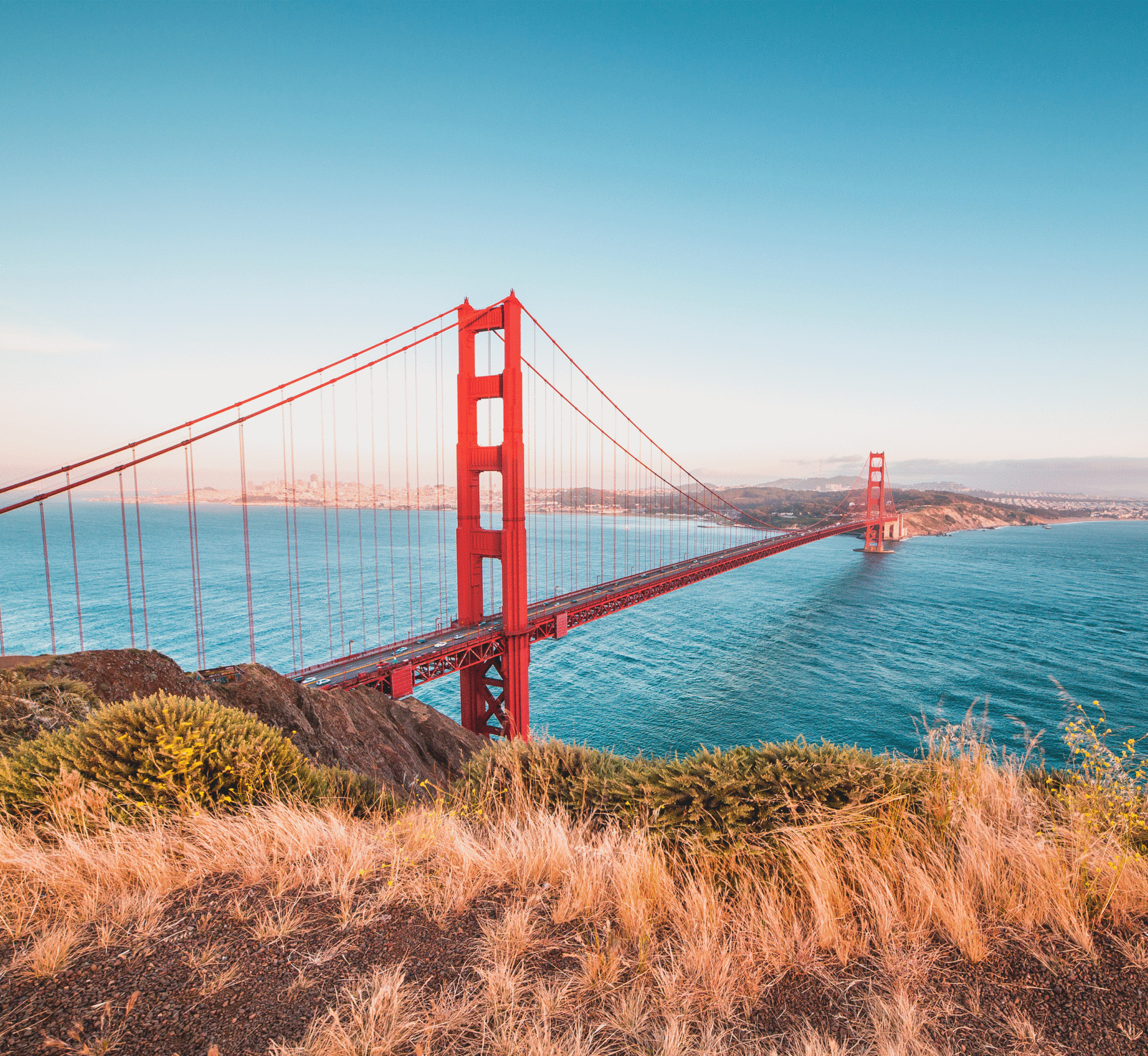
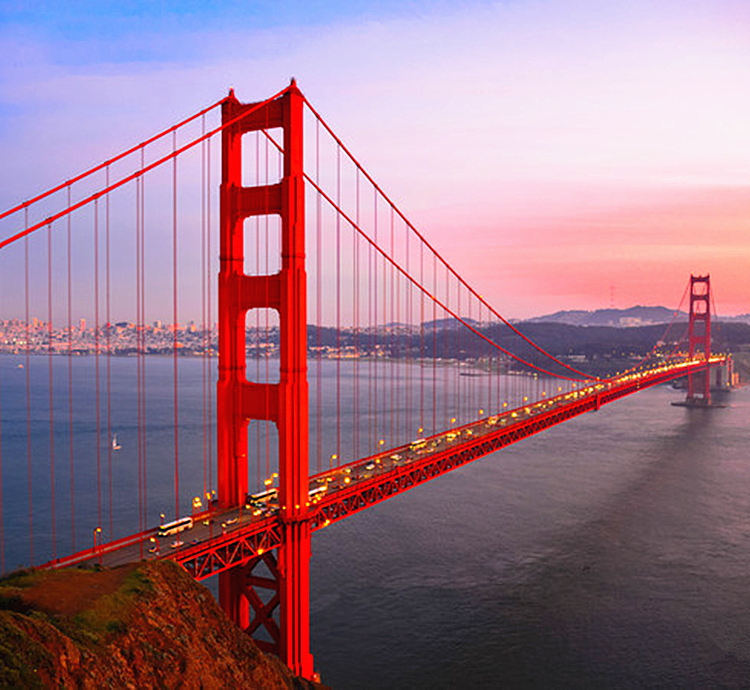
Golden Gate Bridge is the most recognizable monument of San Francisco and one of the most well-known landmarks in the whole state of California. Golden Gate Bridge stretches across the blue waters of San Francisco Bay and Golden Gate Strait. It has been a part of multiple Hollywood films, including San Andreas, Rise of the Planet of the Apes, and X-Men. \nWhen crossing the bridge on foot or by bike, it is far better to experience the bridge than to take a picture of it from a far distance.\n Pedestrian ways to both sides of the bridge, and cyclists are allowed to ride on the western side. If you want to see the bridge for the classic sight of it disappearing into a fog, visit in the morning because it's more favorable weather conditions. \nWhile riding across the Golden Gate Bridge, you will remember it as one of the most popular things to do in San Francisco.

Golden Gate Bridge
More than 100,000 tons of steel went into creating this huge orange and red bridge that crosses San Francisco Bay and Golden Gate Strait.
Its name goes back to the time of the Gold Rush, when the strait was viewed as a gateway to the fields of gold.
There are nice viewpoints north of the bridge where you can get a full view of everything.
The bridge has appeared in a number of major Hollywood movies such as Rise of the Planet of the Apes and X-Men. Walking or biking across it while feeling the winds from the ocean is a great experience.
Advice: For the best views of the Golden Gate Bridge, come to the following locations based on the route you are taking.
1. On the southern side at the Golden Gate Bridge Pavilion, which has a large parking lot, you can see the bridge with mountains behind it, and it’s especially nice for photo opportunities in the morning. The visitor center offers educational exhibits.
2. Vista Point is just to the north of the bridge and has an elevated view of the bridge and the city, so morning light will make for great photos.
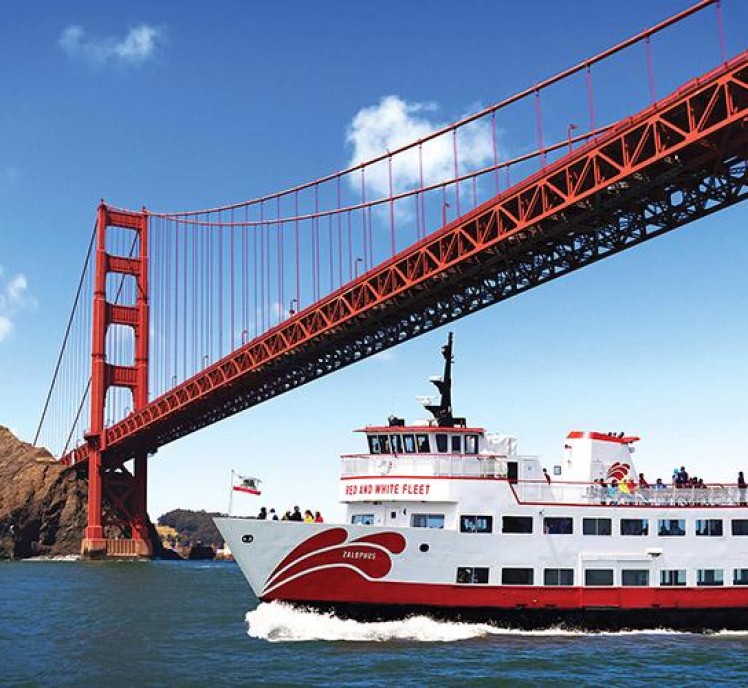
3. Fort Point is under the bridge on the eastern side of the south end, providing a very dramatic view from below the bridge which is best shot in the morning.
4. On the northern side, west of the bridge are the Marin Headlands which have a number of parking areas and good views from a distance.
5. Also a good option is Battery Spencer, another lookout on the west side of the bridge.
6. The US 101 or SR 1 will take you to the north side of the bridge.

Admission: Crossing the bridge on foot is free, so is parking at the viewpoints, but there is a toll that must be paid for vehicles crossing from the north side of the bridge to the south side of the bridge. The toll can only be paid electronically and must be done at least 2 days before crossing, otherwise it will cost $6. The vehicles can access the bridge and the bike access is also open 24/7. On weekdays, you can walk through from 5:00 to 18:30. During daylight saving time, you can walk through from 5:00 to 21:00. \n\nFor a recommended stay of 1-2 hours, you can take buses 2, 4, 8, 10, 18, 24, 27, 38, 44, 54, 56, 58, 70, 72, 72X, 74, 76, 92, 93, 97, 101, 101X and get off at the Golden Gate Bridge Toll Plaza or you can drive to your destination. \n\nThe location is the Golden Gate Bridge in San Francisco, CA 94129. \n\n \n2. Fisherman’s Wharf;
Pacific crab and sea lions \n\nOne of the best places in San Francisco to eat seafood is Fisherman’s Wharf. \n\nFisherman’s Wharf runs from Ghirardelli Square to Pier 35. The area has a big crab as the main sign. It doesn’t have a beach, but it has many shops, restaurants and attractions along the waterfront. Each morning, fishermen leave the wharf and return with crabs from the California Dungeness fishery. If you love seafood Don 39 s Pier is where you will find the most fun and entertainment, so make sure you do not miss it. San Francisco Fisherman 39 s Wharf

This famous waterfront district stretches from Ghirardelli Square to Pier 35.
At the busy Pier 39, you can enjoy shops, restaurants, street performers, and scenery to Alcatraz Island, the Golden Gate, and Bay Bridge.
At Pier 39, sea lions lounge and snooze on floating docks.
November to June is the best season for seafood, especially Dungeness crab.
Great area for gifts and souvenirs with a local theme.

Admission: Free Hours: Open all day Recommended time: 1 day Location: Get off buses 2, 4, 8, 18, 24, 27, 38, 44, 54, 56, 58, 72, 74, and 76 at Beach St & Taylor St and walk 2 mins. You can also take the F Market line to Beach St & Stockton St or The Embarcadero & Stockton St. Address: Pier 39, San Francisco, CA 94133 Lombard Street — one of the world’s most winding streets Highlights: Zigzag roadway; flower-lined curves Locally named Lombard Street, this famed section of roadway has eight very close turns in a single block. To get through this road, you need to go in a slow and controlled manner rather than fast. The steep, and zigzagging roads are a challenge and to avoid accidents, the road is surrounded by landscaped flower beds which earned it the nicknames 39 the crooked street 39 & 39 flower street 39. Once you reach the top, you can see the layered homes of San Francisco and with a floral arrangement and greenery. If you walk slowly downhill, you can appreciate the view and the cars crawling along the bends. Very touristy, but this is one of the must-do activities for first-time visitors. Lombard Street Lombard Street is one of the world's most crooked streets. The view from the top includes the Bay Bridge and Coit Tower. For safety, and to keep cars moving at 5 mph, the city has made landscaped beds. In a very short distance, eight turns of 40 degrees meet the Z-shaped road. When in full bloom, the roses in the beds lining both sides of the street create a stunning view. Costs Entry: free Hours: open 24/7 Duration: 1 hour recommended Location: Lombard Street, San Francisco, California Transport From the Powell-Hyde Cable Car Line, get off at Lombard St & Hyde St. 4. Palace of Fine Arts Wedding photos here are a popular trend Features Understated ancient Roman style architecture Built in 1915 for the Panama-Pacific International Exposition, the Palace of Fine Arts was later abandoned after the event. It was redesigned and restored in 1962 by German-American architect Bernard Maybeck, whose attention to ornamental detail gave the site its refined character. The idealized Roman ruins of the monumental colonnade and rotunda are home to drifting swans, older residents sitting quietly on benches, and newlyweds posing for wedding photographs. This is a place not to be raced through;

of all San Francisco's locations, this is one of the most zen to take a break.
Palace of Fine Arts
The Palace of Fine Arts was built in 1915 for the Panama-Pacific International Exposition that had 18 million attendees. It was left for dead after the exposition and was rebuilt to Maybeck's designs in 1962. It is now a favorite hangout for San Franciscans and features a lagoon with swans and ducks, and the nearby Palace of Fine Arts Theatre.
Cost: Free
Hours: Open 24/7
Duration: 2–3 hours recommended
How to get there: Board the PresidiGO Crissy Field bus to the Palace of Fine Arts.
Address: 3301 Lyon St, San Francisco, CA 94123
5. Alcatraz Island — The Rock
Night tours available

Adventure seekers will find Alcatraz an interesting spot. Alcatraz is located in the San Francisco Bay and was once a federal prison for serious criminals. Visitors can now go to the island on a ferry to tour the prison museum and listen to an audio guide while they walk around. The guide adds significant depth to the experience beyond just visiting a prison.
Additionally, the island was used as a filming location for The Rock. For those seeking an enhanced experience, the evening tour is an option. Tickets are limited so advanced booking is a must.
Alcatraz Island

Alcatraz is a 22-acre rocky island that was once home to serious criminals including mob boss Al Capone, Robert “Birdman” Stroud, and George “Machine Gun” Kelly. Alcatraz Prison's location was a unique suffering for prisoners as they watched San Francisco's living city from their prison cells with barred windows. Along with a museum and a bookstore, bird habitats can be found on what used to be a prison. Alcatraz has a grim history, but it is also a wildlife refuge with many types of birds, and a place for quite reflection. Opening hours: During the day, Alcatraz ferries leave Pier 33 approximately every 30 minutes between 8:45 and 15:20. Return ferries from Alcatraz to Pier 33 run approx every 30 mins between 9:55 - 18:30. Two night ferries from Pier 33 Alcatraz leave at 17:55 and 18:30, and return from Alcatraz at 20:40 and 21:25. Always check the website for the most current info when planning your ferry iteneary. Plan to visit for at least 1/2 day. Begin your journey by taking the ferry from Pier 33 to Alcatraz Island, San Francisco, CA 94133 GOLDEN GATE PARK — 20% LARGER THAN NEW YORK'S CENTRAL PARK WORLD'S LARGEST MANMADE PARK Golden Gate Park spans three miles west from Stanyan Street to Ocean Beach and is 20% larger than New York's Central Park. With over a dozen distinct park sections, it's possible to get lost. The park has everything a city should have such as golf courses, tennis courts, playgrounds, schools, museums, galleries, and gardens. Notable local cultural attractions include the California Academy of Sciences, the Asian Art Museum, and the M. H. de Young Memorial Museum. It also serves as a local getaway, where holiday patrons may bump into artist vendors. For families, it ranks among the best options in the entire city for an all-day visit.
Golden Gate Park
Golden Gate Park, spanning 53 blocks, extends from the Pacific Ocean to Central San Francisco and contains over a dozen miniature parks. It is among the largest man-made parks in the world. Within the park, you can find golf courses, tennis courts, play areas, museums, art galleries, and botanical gardens, making it an excellent destination for a laid-back family outing.
Admission: Entry to the park is free. However, there are fees for some activities, such as: boating ($13-17/hour), Surrey bike rentals ($20), bicycles ($8), and inline skates ($6).
Hours: Open 24/7
Visit Duration: Recommended 1-day visit
Public Transport: Bus 21 and 33 go to Stanyan St & Hayes St.
Address: Golden Gate Park, San Francisco, CA, United States

7. Twin Peaks — a sweeping , 360-degree view of San Francisco
What you can do here: get panoramic views of the city and explore one of San Francisco’s last natural hills.
Twin Peaks is a name given to two adjacent hills. Early Spanish settlers named them due to their shape. It doesn't take long to travel from downtown to the viewpoint, because it offers a full 360-degree view of San Francisco.
One of the best times to see the city is at sunset and when the city lights come on, it's beautiful again.
Twin Peaks
At about 270 meters above sea level, Twin Peaks is San Francisco’s only natural summit, and the climb can be quite the workout. Wind, fog, and a steep grade can make the climb pretty cold so prepare to bundle up for the trek. However, the views of the bay and the city (along with the very red Golden Gate Bridge) are well worth the difficult climb. Twin Peaks is also the best viewing point of the city after dark.
Cost: Free
Hours: Open 24/7
Time recommended: 2 hours
Access: Use public transit (bus 37) to reach Twin Peaks.
Coordinates: Christmas Tree Point Rd, San Francisco, CA 94114
8. California Academy of Sciences: a unique four-part museum
What to see: A premier natural history museum and an important site for contemporary scientific research

Academy of Sciences is located in Golden Gate Park and is home to an aquarium, a planetarium, a natural history museum, and a four-story tropical rainforest. It is a museum that works to bring science as close to the people as possible.

The building’s roof is covered with solar panels to provide some of the museum’s required energy. The soil on the roof is used to insulate the building, and the walls are almost completely made from glass to allow as much light as possible to enter the building. In the rainforest, visitors can ride a glass elevator to reach the bottom level, where an acrylic tunnel allows them to see fish swimming above. Nowhere else can guests get up close with scientists and ask them questions, which is why this facility is great for people wanting to get insight into a working research facility.
California Academy of Sciences

The California Academy of Sciences is a natural history museum that combines education, exhibitions, and research focused on the marine, terrestrial and aerial aspects of life. The Academy houses the Steinhart Aquarium, Morrison Planetarium, Kimball Natural History Museum, and a tropical rainforest. The planetarium offers a simulated trip across the universe while the aquarium features living coral reefs and over 2000 fish from various species. Also, the building has one of the largest living roofs on the planet. Guests can view scientists through glass partitions, ask them questions, and/or visit the Naturalist Center on the 2nd floor for more information.
Entry Fee: US$29.95 per adult; US$19.95 per child
Opening Days and Times: Mon-Sat 9:30 - 17:00, Sun: 11:00 to 17:00

Duration of Stay: Recommended half a day
Transportation: Take bus 44 or N line streetcar to 9th Ave & Irving
Address: 55 Concourse Drive, Golden Gate Park, San Francisco, CA 94118
9. Haight-Ashbury - the epicenter of hippie culture
Notable Feature: Beginning of the hippie movement and amazing street art

Haight Street, which is close to the eastern entrance of Golden Gate Park, was a center of youthful idealism in the 1960s. Large groups of hippies would gather on the lawns of Golden Gate Park and the area became known for the movement.

Currently, there are many unique independent stores on Haight Street. Perhaps its most famous sight, a mannequin leg wearing fishnet stockings and protruding from a second floor window, leads to a vintage clothing store. The entire district's old buildings are covered with expressive murals and eccentric signage that give the entire district a distinctive countercultural vibe.
Haight-Ashbury District
10. Cable Cars — the most classic way to experience San Francisco
Highlights: An iconic vintage mode of transport
The cable cars of San Francisco have been a moving symbol of the city since 1873. They still operate daily and traverse the cities steep hills. The only remaining cable car lines are Powell-Hyde, Powell-Mason, and California Street. The historic F line streetcar runs from Market Street to Fisherman’s Wharf, offering an authentic experience reminiscent of earlier days in San Francisco. The streetcars’ conductors sell tickets onboard, and at designated ticket sales points. Visitors can view the manual turning of the cable cars at the Powell/Market terminal, located at the Powell-Mason and Powell-Hyde lines, on the famous turntable.
Fare: US$7 per person, one way
2. Two-day San Francisco itinerary
DAY 1: Palace of Fine Arts → Lombard Street → Union Square → Golden Gate Park → Twin Peaks

This first day will involve multiple attractions over a distance of around 11 kilometers which makes walking unrealistic. A private car will be necessary for this part of the itinerary. Start early at the Palace of Fine Arts, and then continue on to the driving challenge of Lombard Street. Go shopping at Union Square in the city center. If you need to take a break, come back for a midday rest. Then, head to Golden Gate Park for the rest of the afternoon. Since the park is huge (it’s the biggest in the US, I think), allow more time than you expect. After dinner, go to Twin Peaks for sunset or enjoy the city lights. DAY 2: Alcatraz Island → Fisherman’s Wharf → Golden Gate Bridge Day 2 involves a bit of a ferry ride. So, it will be best to take things a bit more relaxed on this day. Alcatraz is usually best with a morning or evening visit. So, you will start with the morning visit. Then, take the ferry from Pier 33 to Alcatraz. After that, head back to Fisherman’s Wharf for lunch. After your break, visit the main sights of the wharf before going to the Golden Gate Bridge just before evening so that you can feel the sea breeze and enjoy the vibe of the night. These attractions are scattered all over the city and trying to cover them all is a bit of a rush, especially for first time visitors. This is even more true for visitors that don't know English, or are not good at reading maps. Day tours can make covering all of these attractions a bit easier by providing transport, a guide, and other things. Day tours allow you to spend more time to experience the city instead of worrying about getting there. Have you visited the top 10 attractions in the city?
If you still have more places in mind, you can get a local travel planner. Travel Guide Planning a trip to the United States: a practical guide to preparation and itinerary design

Overview of the United States
Pre-departure preparation
562092215 Travel Guide